Physical Address
304 North Cardinal St.
Dorchester Center, MA 02124
Physical Address
304 North Cardinal St.
Dorchester Center, MA 02124

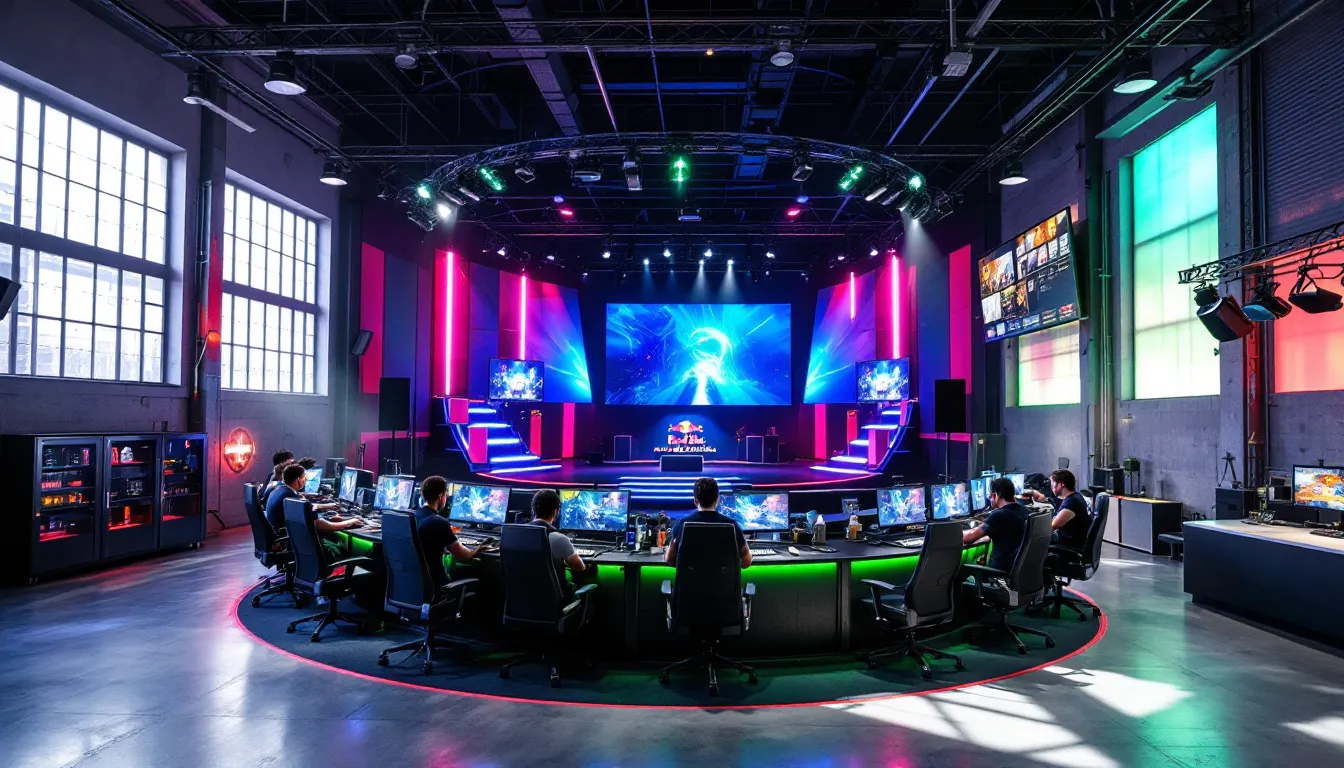
Red Bull’s done it again. Not content with dominating extreme sports and motorsports, the energy drink giant has built what might be the most ambitious gaming venue on the planet. The Red Bull Gaming Sphere isn’t just another esports arena with gaming chairs and RGB lighting, it’s a purpose-built cathedral for competitive and casual gaming alike, packed with tech that’ll make your home setup look like a retro LAN party.
Whether you’re a competitive player chasing frame-perfect advantage, a content creator hunting for the ultimate studio space, or just someone who wants to experience gaming at its absolute peak, the Gaming Sphere represents a new benchmark. This isn’t hype for hype’s sake. The facility houses tournament infrastructure that rivals major esports venues, community spaces designed for open play, and emerging tech zones that feel like stepping into 2030. Let’s break down what makes this place tick and whether it lives up to the billing.
The Red Bull Gaming Sphere is a multi-level gaming complex that blends competitive esports infrastructure with public gaming access. Think of it as the intersection of a professional tournament venue, a high-end PC café, and a community hub, all under one roof with Red Bull’s signature over-the-top approach to design and execution.
The facility sits in London’s Shoreditch district, occupying a renovated industrial building that’s been gutted and rebuilt from the foundation up. The exterior maintains the area’s warehouse aesthetic, but step inside and you’re looking at 50,000 square feet of gaming space spread across three floors.
The ground floor houses open gaming stations and casual play areas with floor-to-ceiling windows that let natural light flood the space, a rarity in gaming venues that usually feel like windowless bunkers. The second floor contains the tournament stage and broadcast facilities, while the third level is dedicated to VR zones, private team rooms, and content creation studios.
Architecturally, the Sphere uses modular design principles. Walls can be reconfigured, lighting rigs adjust on motorized tracks, and even the flooring in certain sections can be swapped to accommodate different event types. It’s built for flexibility without sacrificing that premium feel.
Red Bull’s entry into permanent gaming venue operation isn’t exactly surprising if you’ve followed their esports investments over the past decade. They’ve sponsored teams, hosted tournaments, and run gaming content initiatives since before esports hit mainstream consciousness.
The Sphere represents a vertical integration play. Instead of renting venues for Red Bull-branded events or partnering with existing facilities, they’ve built a space that serves as headquarters for their European gaming operations, a content factory for their media team, and a community resource that generates goodwill (and foot traffic).
According to statements from Red Bull’s gaming division, the goal was creating a “third space” for gamers, somewhere between home and the office where competitive and social gaming could coexist. Whether that’s genuine community-building or clever marketing depends on your cynicism level, but the execution speaks for itself.
This is where the Sphere separates itself from wannabe gaming lounges. The hardware specs aren’t just good, they’re excessive in the best possible way.
The ground floor features 80 gaming stations split between PC and console configurations. Each PC runs identical specs to eliminate hardware advantage during open play:
Console stations pack PS5 Pro and Xbox Series X units connected to 120Hz 4K OLED screens. Every station includes tournament-standard audio isolation headsets and mechanical keyboards with hot-swappable switches if you want to bring your own keycaps.
The tournament floor ups the ante with 240Hz 1080p displays for competitive titles where refresh rate trumps resolution, plus dedicated LAN infrastructure that guarantees sub-1ms latency between stations. Some pro players and streamers document their gaming gear choices extensively, and the Sphere’s tournament setups mirror those preferences.
The main tournament stage features a 30-foot LED wall running at 4K resolution with HDR support. It’s not just for spectacle, the screen uses low-latency signal processing that keeps delay under 8ms, which matters when you’re displaying live gameplay to a crowd while players need real-time responsiveness.
Audio comes through a Meyer Sound system with 32 discrete channels. They can simulate positional audio for the audience that mirrors what players hear in headsets, or flip to traditional arena sound for hype moments and walkouts.
Each gaming station has individual audio zones managed through spatial processing, so the player in station 12 isn’t hearing bleed from station 13’s comms or game audio. It’s the kind of detail most venues ignore until it becomes a problem during competition.
The third floor dedicates 8,000 square feet to VR and experimental tech. Twenty VR stations run Valve Index and Meta Quest Pro headsets with full-body tracking rigs for titles that support it. The space uses lighthouse tracking arrays that cover the entire play area, allowing free-roam VR experiences without worrying about losing tracking when you turn around.
There’s also a mixed reality studio with green screen space and motion capture gear for content creators who want to produce VR content or integrate themselves into gameplay footage. Red Bull clearly expects this area to generate YouTube and Twitch content that promotes the venue organically.
An “emerging tech” corner rotates through experimental hardware, currently featuring racing sim rigs with direct-drive wheelbases and haptic racing seats, plus a few brain-computer interface devices that are more curiosity than practical gaming tool. It’s the kind of stuff that might be mainstream in three years or might be a dead-end, but it’s there if you want to try it.
Tournament infrastructure is where the Sphere flexes hardest. This isn’t a venue that hosts events occasionally, it’s designed as a broadcast and competition facility that happens to be open to the public between tournaments.
The main stage accommodates formats from 1v1 fighting games to 5v5 tactical shooters. Ten player stations on stage use sound-isolating booths for team games, with backup stations off-stage in case of hardware failure mid-match.
Seating capacity hits 300 for the main floor, with standing room pushing that to 450 during major events. That’s not arena-scale, but it’s comparable to the mid-tier venues where Tier 2 and Tier 3 esports tournaments typically land. The Sphere isn’t replacing Wembley Arena for World Championship finals, but it’s perfect for regional qualifiers, national championships, and invitational events.
Player amenities include dedicated green rooms, practice rooms with identical hardware to stage setups, and a players’ lounge with food service. Referees work from an elevated booth with sightlines to all player stations and direct access to match PCs for pauses and technical checks.
The broadcast control room looks like it was ripped from a traditional sports network. Twelve broadcast cameras cover the stage from multiple angles, including overhead booms for crowd shots and slider systems for dynamic player close-ups.
They run a full production stack with instant replay capability, live graphics overlay, and multi-POV switching that can show first-person gameplay, player cams, and audience reactions simultaneously. The system supports streaming to Twitch, YouTube, and Twitter/X concurrently at up to 4K60 on the main feed plus individual POV streams for each player if the production wants to go full multi-stream.
Audio production includes a dedicated sound engineer booth with access to all player comms, game audio, commentary feeds, and arena sound. They can create separate audio mixes for in-venue experience versus stream, which matters more than you’d think, what sounds good in the room often needs adjustment for stream audiences.
The Sphere also offers production services to tournament organizers who don’t have their own broadcast team. That’s a smart revenue play and lowers the barrier for smaller tournaments to access professional presentation.
A venue this spec’d could easily be tournament-only and lock out casual players. Credit where due: Red Bull structured the Sphere to actually be accessible when events aren’t running.
Public gaming hours run Tuesday through Sunday, 2 PM to 11 PM, with extended hours until 1 AM on Fridays and Saturdays. Mondays are reserved for maintenance and private events. During open hours, anyone can book station time and play on that ridiculous hardware.
Pricing sits at £8 per hour for standard PC/console stations, £12 per hour for premium stations (the ones with 480Hz monitors), and £15 per hour for VR setups. That’s not cheap, but it’s competitive with high-end gaming cafés in London, and you’re getting significantly better hardware and environment.
The game library includes current competitive titles (Valorant, CS2, League of Legends, Dota 2, Overwatch 2, Apex Legends), popular multiplayer games (Fortnite, Warzone, Minecraft), and a rotating selection of single-player releases. You can also link your own accounts if you want to play on your Steam library or ranked account.
Walk-ins are welcome if stations are available, but booking in advance is recommended, especially on weekends. The Sphere’s booking system shows real-time availability and lets you select specific stations if you have hardware or seating preferences.
Red Bull runs structured programs for players who want to improve. Weekly workshops cover game-specific topics, aim training for FPS players, macro fundamentals for MOBA players, movement tech for fighting games. These sessions are coached by competitive players or content creators who actually know their stuff, not random “gaming influencers” with no credentials.
The Performance Academy is a longer-term program that runs in 8-week blocks. Participants get structured coaching, VOD review sessions, and access to performance analytics tools. It’s aimed at aspiring competitive players who are past the beginner stage but need guidance to reach the next level. Cost runs £200 for the full 8-week session, which includes 16 hours of coaching and unlimited practice station access during off-peak hours.
They also host community tournaments with small prize pools, nothing life-changing, but enough to make weekend competitions feel meaningful. Past events have covered everything from Rocket League 3v3s to Tekken 8 brackets.
Since opening in late 2024, the Sphere has built a calendar of recurring events plus one-off showcases that leverage Red Bull’s connections in the esports world.
The Red Bull Home Ground series for Valorant has made the Sphere its European home. The most recent iteration in January 2026 featured eight teams competing for a £50,000 prize pool, with matches streamed to over 200,000 concurrent viewers. The format showcased the venue’s broadcast capabilities, production quality rivaled official Riot Games broadcasts, and in-venue atmosphere looked electric from stream perspective.
League of Legends European Masters (EU Masters) used the Sphere for group stage matches during the 2025 Summer Split. While playoffs moved to a larger venue, having EUM games at the Sphere established it as a legitimate stop on the competitive circuit. Major tournaments and competitive moments sometimes get recognized at annual industry events, and hosting official Riot tournaments positions the Sphere in that conversation.
The UK Street Fighter National Championship ran its 2025 finals at the Sphere in November, bringing together the UK’s top fighting game players. Fighting game tournaments have different production needs than team-based esports, and the Sphere’s modular stage design accommodated the format smoothly.
Red Bull’s roster of sponsored content creators regularly uses the Sphere for showcase events. Ludwig’s Mogul Chessboxing series filmed an episode there in mid-2025, converting the gaming floor into a combination chess arena and boxing ring (with proper safety measures). The crossover between gaming content and IRL events fits the Sphere’s flexible design philosophy.
Several prominent streamers have hosted viewer meet-and-greets at the venue, combining fan interaction with casual gaming sessions. Pokimane, Valkyrae, and IShowSpeed have all run events there, drawing crowds that pushed the venue to capacity.
The Creator Bootcamp series brings 20 aspiring content creators through a weekend intensive covering streaming basics, content strategy, and production quality. Participants get studio time, mentorship from established creators, and access to the Sphere’s production equipment. It’s part talent recruitment for Red Bull’s gaming sponsorships, part community initiative, typical Red Bull move of blurring the line between marketing and genuine value delivery.
Getting into the Sphere is straightforward, though demand can make booking competitive during peak times.
Bookings run through the official Red Bull Gaming Sphere website (redbull.com/gaming-sphere-london). The system requires account creation but doesn’t lock you into marketing emails if you opt out during signup.
The booking interface shows availability by day and time slot, with real-time updates on station availability. You select your preferred station type (standard PC, premium PC, console, or VR), duration (minimum 1 hour, maximum 5 hours per booking), and time slot. Payment happens upfront via card: they accept Visa, Mastercard, Amex, and PayPal.
For group bookings (parties of 5+), there’s a separate form that lets you reserve adjacent stations and request specific game setups. Tournament or event space rentals require direct contact with the Sphere’s events team and come with custom pricing based on requirements.
Walk-ins are technically possible, but availability isn’t guaranteed. The front desk can check current openings and book you in if stations are free. Weekday afternoons are your best bet for walk-in success: Friday and Saturday evenings are almost always fully booked.
Cancellation policy allows free cancellation up to 24 hours before your booking. Cancel within 24 hours and you’re charged 50% of the booking cost. No-shows forfeit the full amount.
Arrive about 10 minutes before your booked time, check-in requires ID verification to match your booking name. You’ll get a station assignment and a quick orientation if it’s your first visit. Staff walk you through the hardware setup, peripheral options, and game library access.
Peripherals at each station are standardized, but you’re allowed to bring your own mouse, keyboard, or controller if you prefer. Some competitive players bring their entire setup minus the PC. Just be prepared for a quick equipment check to ensure nothing’s sketchy.
The venue has a café area serving the expected Red Bull products (regular, Sugar-free, various special editions) plus coffee, snacks, and light food. Prices are venue-markup expensive but not criminally so, £3.50 for a Red Bull, £6 for a sandwich. You can bring your own snacks but outside drinks aren’t allowed.
Staff presence is solid without being overbearing. Tech support is available if you run into hardware or software issues, and they’re generally knowledgeable enough to solve problems quickly. Crowd management keeps noise at reasonable levels even during busy periods.
Parking is limited, this is central London, after all. Public transport via Shoreditch High Street Overground station is the smart move, putting you two minutes’ walk from the entrance. If you’re driving, expect to use nearby paid parking structures.
The Sphere isn’t alone in the high-end gaming venue space. Several competitors and analogues offer similar experiences with different strengths:
Belong Gaming Arenas (UK-based chain with 30+ locations) operate at a more accessible price point (£5-7/hour) but with less cutting-edge hardware. Their stations typically run RTX 4070 Ti-level GPUs rather than the 5080 Ti in the Sphere. Belong’s strength is scale and accessibility, they’re neighborhood venues rather than destination locations. For regular weekly gaming sessions, Belong makes more sense. For special occasions or when you want peak hardware, the Sphere edges ahead.
HyperX Arena (Las Vegas) offers a comparable experience in terms of hardware specs and tournament infrastructure. The Las Vegas location has larger capacity (1,000+ for major events) and 24/7 operations. But, it’s positioned in a tourist destination rather than an accessible urban location, making it less practical for regular use by local players. The Sphere wins on community integration and program structure.
Fortress Melbourne (Australia) might be the Sphere’s closest global competitor. Similar hardware specs, strong tournament hosting pedigree, and integrated food/bar service that the Sphere lacks. Fortress edges ahead on amenities and atmosphere: the Sphere wins on broadcast infrastructure and emerging tech areas. It’s splitting hairs, both are top-tier facilities.
ESL Gaming Centers (multiple European locations) focus heavily on competitive play and tournament hosting but offer limited public access compared to the Sphere. Hardware is tournament-grade but rotates less frequently. For serious competitive players, ESL centers might be preferable. For mixed competitive and casual use, the Sphere’s broader approach works better.
Coverage of competitive gaming and venue developments often appears on esports news platforms, which have documented the rise of these premium gaming spaces as esports infrastructure matures. The Sphere represents the high-end of this trend, excellent execution but priced accordingly.
The Gaming Sphere exists in a transitional moment for gaming spaces. Traditional PC cafés are being squeezed by improving home hardware accessibility, while demand for premium experiences and community spaces continues growing. The Sphere’s model, blending public access, tournament hosting, content creation, and brand presence, might point toward how gaming venues evolve.
Red Bull has hinted at expansion plans without committing to specifics. A second location in Berlin or Los Angeles would make sense given their esports presence in those markets. The challenge is that facilities like the Sphere require significant capital investment and ongoing operational costs that don’t pencil out purely on station rental revenue. Red Bull’s deep pockets and marketing budget absorption make it viable: smaller operators couldn’t replicate this model easily.
The venue’s emphasis on emerging tech zones suggests Red Bull is positioning for whatever comes next in gaming, whether that’s VR going mainstream, cloud gaming requiring dedicated access points, or something unexpected. Modular design principles mean the Sphere can adapt to new hardware categories without complete renovation.
One interesting development is the Sphere’s Academy program potentially serving as talent pipeline for Red Bull’s esports teams and content roster. If the venue can identify and develop competitive players or creators who then join Red Bull’s ecosystem, the facility becomes part of integrated talent development rather than just a venue. That’s forward-thinking in ways most gaming spaces don’t attempt.
The risk is that the Sphere becomes a victim of its own success, too popular for casual access, priced out of regular use for most players, and eventually serving as an occasional destination rather than community hub. Right now that hasn’t happened, but as word spreads and demand increases, Red Bull will need to balance accessibility with premium positioning.
Whether this model spreads depends partly on the Sphere’s financial performance (which Red Bull hasn’t disclosed) and partly on whether competitors see value in replicating the approach. Traditional sports have understood the value of training facilities and fan experience centers for decades. Gaming is catching up, and venues like the Sphere are the vanguard of that shift.
The Red Bull Gaming Sphere delivers on its premise. It’s genuinely impressive hardware, thoughtfully designed space, and legitimate tournament infrastructure wrapped in Red Bull’s signature over-the-top execution. For serious competitive players, content creators, or anyone who wants to experience gaming at its current peak, it’s worth the trip to Shoreditch.
The £8-12/hour pricing puts it out of range for regular use for most players, but that’s the point, this is destination gaming, not your daily grind spot. The combination of public access, structured training programs, and world-class tournament facilities makes it more than just a marketing stunt with gaming PCs.
If you’re in London and haven’t checked it out, book a session during off-peak hours to avoid crowds. If you’re visiting from elsewhere, time your trip around one of their open tournaments or creator events to see the venue at full capacity. The Sphere represents where gaming venues can go when budget and ambition align. It’s not perfect, and it’s not for everyone, but it’s undeniably impressive when done right.
