Physical Address
304 North Cardinal St.
Dorchester Center, MA 02124
Physical Address
304 North Cardinal St.
Dorchester Center, MA 02124

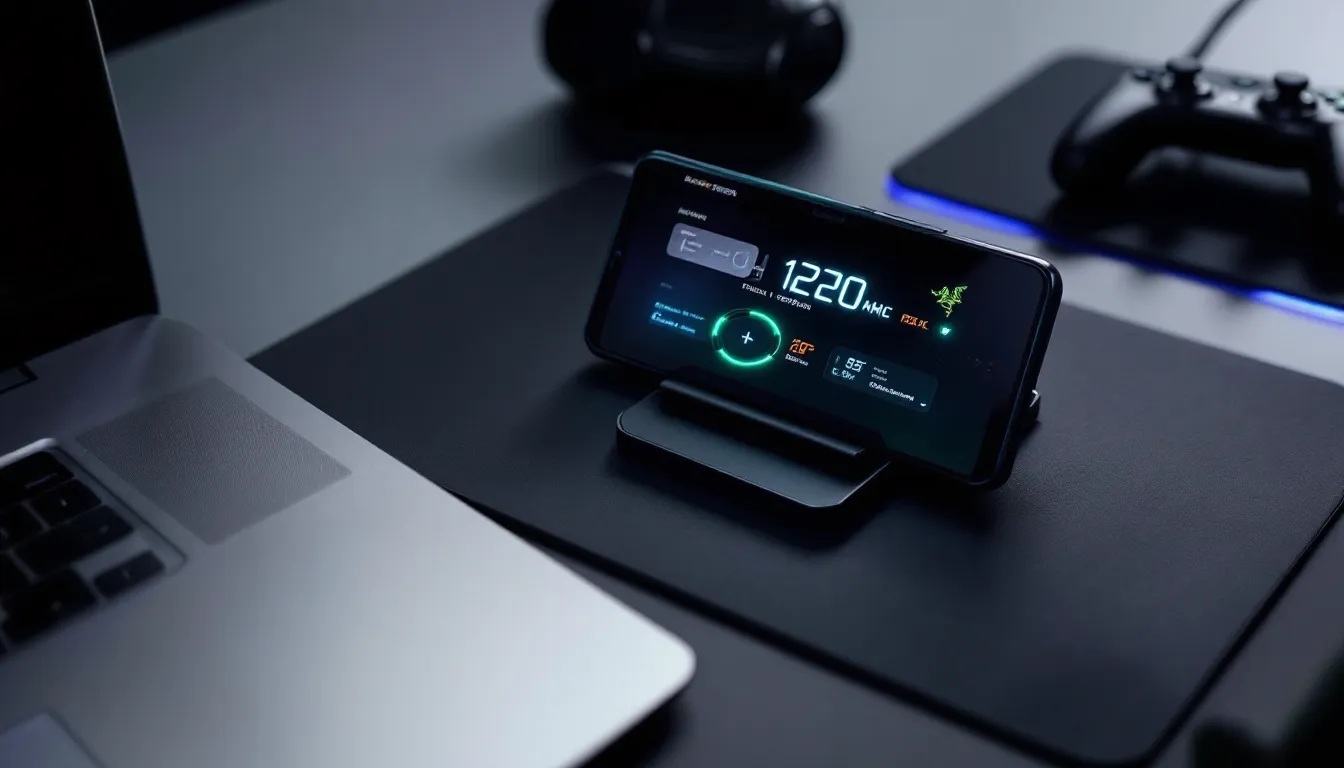
Razer’s attempt to crack the mobile gaming market turned heads when the original Razer Phone dropped in 2017. With a 120Hz display and front-facing stereo speakers that made competitors look lazy, it set a benchmark that forced the industry to evolve. But the gaming phone landscape in 2026 looks nothing like it did during Razer’s initial run.
While Razer hasn’t released a new phone model since the Razer Phone 2 in 2018, their legacy continues to shape what gamers expect from dedicated gaming handsets. The DNA of those devices, high refresh rate displays, aggressive cooling, and uncompromising specs, lives on in every gaming phone that hits the market today. Whether you’re chasing that original Razer hardware on the secondhand market or trying to understand what made these phones special, this guide breaks down everything you need to know about Razer’s gaming phone philosophy and how it stacks up in today’s mobile gaming ecosystem.
Razer gaming phones weren’t just flagship Android devices with RGB lighting slapped on. They represented a different design philosophy, one that prioritized sustained performance and gaming-specific features over camera bumps and thin bezels.
The Razer Phone and Razer Phone 2 both featured vapor chamber cooling systems when most flagships relied on passive heat dissipation. This allowed the Snapdragon 835 (original) and Snapdragon 845 (Phone 2) to maintain peak clock speeds during extended sessions without thermal throttling.
The display choices told the same story. That 120Hz UltraMotion display (launched before it became an industry standard) delivered 1440p resolution with variable refresh rate support. Games like PUBG Mobile and Vainglory could hit that 120fps ceiling when optimized, giving players a tangible competitive edge in reaction time and motion clarity.
Razer didn’t compromise on RAM, either. 8GB became standard across both models, with dual front-facing speakers powered by Dolby Atmos creating a soundstage that made headphones optional rather than mandatory.
What separated Razer from traditional phone manufacturers was the Razer Cortex mobile app, a game launcher that optimized performance per title, adjusted CPU/GPU allocation, and cleared background processes automatically. It wasn’t bloatware: it was a practical tool that worked.
The Razer Phone 2 added wireless charging with Razer Chroma RGB lighting on the logo, syncing with Razer’s existing peripheral ecosystem. If you already owned a Razer keyboard, mouse, or headset, the phone could match lighting profiles through the Razer Synapse ecosystem.
Accessory support included the Razer Gaming Finger Sleeve for reduced screen friction and official dock solutions that turned the phone into a desktop-style gaming station when connected to external displays via USB-C. The focus was always on creating a complete gaming environment, not just selling hardware.
The first Razer Phone launched in November 2017 for $699, built on the bones of Nextbit Robin (a company Razer had acquired earlier that year). The device packed a Qualcomm Snapdragon 835, 8GB RAM, and a massive 4,000mAh battery that could survive 6-7 hours of continuous gaming.
The blocky, angular design, reminiscent of Razer’s laptop aesthetic, polarized users. No curves, no camera island, just a rectangular slab with serious thermal management. The dual front-firing speakers with dual amplifiers made it the loudest phone on the market, and the 120Hz display became its killer feature when most phones were stuck at 60Hz.
Camera performance was admittedly mediocre. A 12MP dual-camera setup couldn’t compete with the Pixel 2 or iPhone X, but Razer’s target audience cared more about frame rates than photo quality.
Razer doubled down in October 2018 with the Razer Phone 2, priced at $799. The Snapdragon 845 processor delivered a 30% GPU performance boost over its predecessor, while the vapor chamber cooling system expanded to cover more surface area.
Key upgrades included:
The Phone 2 also supported the Razer Raiju Mobile controller, creating a console-like experience for Android titles and cloud gaming services like GeForce Now and Xbox Cloud Gaming.
Razer hasn’t released a new gaming phone since 2018. The company quietly discontinued the Razer Phone line, with CEO Min-Liang Tan confirming in 2020 that they had no immediate plans for a Razer Phone 3.
You can still find Razer Phone 2 units on secondhand markets (eBay, Swappa, Facebook Marketplace) ranging from $150-$300 depending on condition. But, the hardware is eight years old at this point, running Android 9.0 Pie with limited app compatibility and no security updates since 2020.
For collectors or those curious about gaming phone history, a Razer Phone 2 offers a nostalgic look at where the category began. For actual competitive gaming in 2026, modern alternatives have surpassed Razer’s legacy devices in every measurable way.
Both Razer phones featured a 5.72-inch IGZO LCD panel with 1440 x 2560 resolution (515 ppi). The 120Hz refresh rate with UltraMotion technology remains the defining spec, supporting variable refresh down to 90Hz to conserve battery during less demanding games.
Color accuracy hit 100% DCI-P3 wide color gamut coverage, making games look vibrant without the oversaturation issues that plagued early AMOLED panels. The lack of a notch or hole-punch meant symmetrical bezels, a trade-off for those dual speakers.
The Razer Phone shipped with:
The Razer Phone 2 upgraded to:
By 2017-2018 standards, these were flagship-tier specs. In 2026, they’re roughly equivalent to budget phones like the Moto G series in raw compute power.
Razer’s vapor chamber cooling used a sealed copper chamber with internal liquid that evaporated and condensed to distribute heat across the phone’s aluminum chassis. This kept the Snapdragon 845 running at peak frequencies 23% longer than phones with standard graphite heat spreaders, according to independent hardware testing.
The Phone 2’s expanded cooling footprint reduced hotspots during hour-long Fortnite sessions, keeping surface temps below 42°C even at max brightness and performance mode.
The 4,000mAh battery provided:
Qualcomm Quick Charge 4+ supported charging from 0-50% in approximately 30 minutes using the included 15W adapter. The Phone 2 added Qi wireless charging at 10W, which was convenient but slower than wired options.
The Razer Phone supported 120fps in select titles including:
Most mainstream games like PUBG Mobile, Call of Duty Mobile, and Genshin Impact were capped at 60fps by developers, though the 120Hz display still reduced input lag and improved touch responsiveness during 60fps gameplay.
Razer’s Game Booster app allowed per-game profiles with custom CPU/GPU clock speeds, resolution scaling, and frame rate caps. You could prioritize battery life for turn-based games or push max performance for shooters.
The dual front-facing speakers with dedicated amplifiers hit 90dB+ at max volume, loud enough to annoy everyone in a quiet room. Dolby Atmos processing created a convincing stereo separation for directional audio cues in battle royales.
The THX-certified USB-C audio (via included adapter or THX-certified headphones) delivered 24-bit/192kHz playback with dedicated DAC. For competitive players, this meant clearer footstep audio and better positional awareness.
Haptic feedback was basic, a standard linear motor that couldn’t compete with modern Taptic Engines or X-axis linear motors found in 2026 gaming phones. It worked for notification vibrations but didn’t add much to gameplay immersion.
Razer offered several first-party accessories:
Third-party controller support included Xbox, PlayStation, and generic Bluetooth gamepads. For cloud gaming platforms like GeForce Now and Xbox Cloud Gaming, the Razer Phone 2’s 120Hz display and low-latency Bluetooth 5.0 made it a solid streaming device in 2018-2019.
The ASUS ROG Phone launched a year after the original Razer Phone with similar specs but more aggressive gaming features. By 2026, ASUS is on the ROG Phone 8 series, with Snapdragon 8 Gen 3 processors, 165Hz AMOLED displays, and AirTrigger 8 ultrasonic buttons.
Razer phones offered cleaner software and better build quality, but ASUS leaned into the gamer aesthetic with customizable RGB lighting, modular accessories (AeroActive Cooler, TwinView Dock), and deeper game-specific optimizations.
If Razer had continued development, they likely would’ve competed in the premium gaming phone segment ($899-$1,299), focusing on ecosystem integration rather than modular gimmicks.
Lenovo Legion Phone series (now discontinued) experimented with side-mounted charging ports and pop-up selfie cameras for uninterrupted landscape gaming. RedMagic phones (still active in 2026) offer flagship specs at mid-tier prices ($499-$699) with built-in cooling fans and shoulder triggers.
Razer’s design was more conservative, no moving parts, no flashy LEDs on the front panel. This made it more socially acceptable as a daily driver but less exciting for hardcore mobile esports players who wanted every possible edge.
According to recent hardware comparisons, modern gaming phones now prioritize sustained performance over peak benchmarks, a philosophy Razer pioneered with their vapor chamber cooling.
At launch, the Razer Phone ($699) undercut the iPhone X ($999) and Galaxy S9+ ($839) while matching or exceeding gaming performance. The Razer Phone 2 at $799 competed directly with the OnePlus 6T ($549) and Pixel 3 XL ($899).
In 2026, if you’re buying used:
For budget-conscious gamers, a used ROG Phone or mid-tier RedMagic offers better value than hunting for Razer’s legacy hardware.
In their prime (2017-2019), Razer phones were ideal for players competing in Mobile Legends, Arena of Valor, Vainglory, and early PUBG Mobile tournaments. The 120Hz display reduced input lag by approximately 8-10ms compared to 60Hz panels, and the dual speakers eliminated the need for headphones during practice sessions.
In 2026, competitive players need modern hardware with 144Hz+ displays, Snapdragon 8 Gen 3 or Apple A17 Pro processors, and active game developer support. Razer phones are museum pieces, not competitive tools.
The Razer Phone 2’s Qualcomm Snapdragon 845 could handle 1080p60 streaming to Twitch or YouTube via apps like Streamlabs or Omlet Arcade. The front-facing speakers meant streamers could monitor chat audio without headphones, though the weak front camera (8MP) was a drawback for face-cam streams.
Modern content creators should look at phones with better camera systems, longer battery life, and official streaming partnerships. The iPhone 15 Pro, Galaxy S24 Ultra, or dedicated streaming phones like the Xiaomi Black Shark 5 Pro offer superior workflows.
If you value:
Then a standard flagship with a 120Hz+ display (now commonplace) will serve you better. Gaming phones make sense only if you prioritize sustained performance and gaming-specific features over everything else.
If you’re running a Razer Phone in 2026, squeeze every bit of performance with these tweaks:
For thermal management, remove any phone case during gaming sessions. The aluminum chassis is designed to dissipate heat: cases trap it and cause throttling.
Beyond Razer Cortex, install:
For game library management, Steam Link and Xbox Cloud Gaming turn the Razer Phone into a portable console when paired with a Bluetooth controller.
Razer Phone batteries degrade like any lithium-ion cell. If you’re using one in 2026:
Physical maintenance is minimal, the aluminum body resists scratches, but the LCD can develop dead pixels over time. No official screen replacements exist: you’ll need third-party parts from AliExpress or eBay ($80-120).
Razer no longer sells gaming phones directly. Your only options are secondhand marketplaces:
When buying used, verify:
Razer’s official warranty ended years ago. Third-party sellers may offer 30-90 day return windows, but don’t expect manufacturer support.
For repairs:
Custom ROM support extends the phone’s usability. LineageOS, Paranoid Android, and crDroid offer Android 12-13 builds with security patches through community development. This won’t improve gaming performance but keeps the phone functional for basic tasks.
Razer’s gaming phones carved out a niche that barely existed before 2017 and proved there was demand for mobile hardware that prioritized frame rates over megapixels. The 120Hz display standard they popularized is now table stakes for any phone over $400. Their vapor chamber cooling influenced everything from ROG Phones to the latest iPhone Pro models.
But nostalgia doesn’t win ranked matches. If you’re serious about mobile gaming in 2026, the Razer Phone 2 is a relic, fun to tinker with, impressive in its historical context, but outclassed by modern hardware in every metric that matters. The gaming phone market they helped create has moved on to 165Hz displays, active cooling fans, Snapdragon 8 Gen 3 chips, and developer partnerships that Razer never secured.
For collectors or those curious about gaming phone evolution, a sub-$200 Razer Phone 2 offers a tangible piece of mobile gaming history. For everyone else, put that money toward a current-gen gaming phone or a flagship with high refresh rate support. Razer’s legacy lives on in the industry they pushed forward, just not in hardware you should actually buy for competitive play.
