Physical Address
304 North Cardinal St.
Dorchester Center, MA 02124
Physical Address
304 North Cardinal St.
Dorchester Center, MA 02124

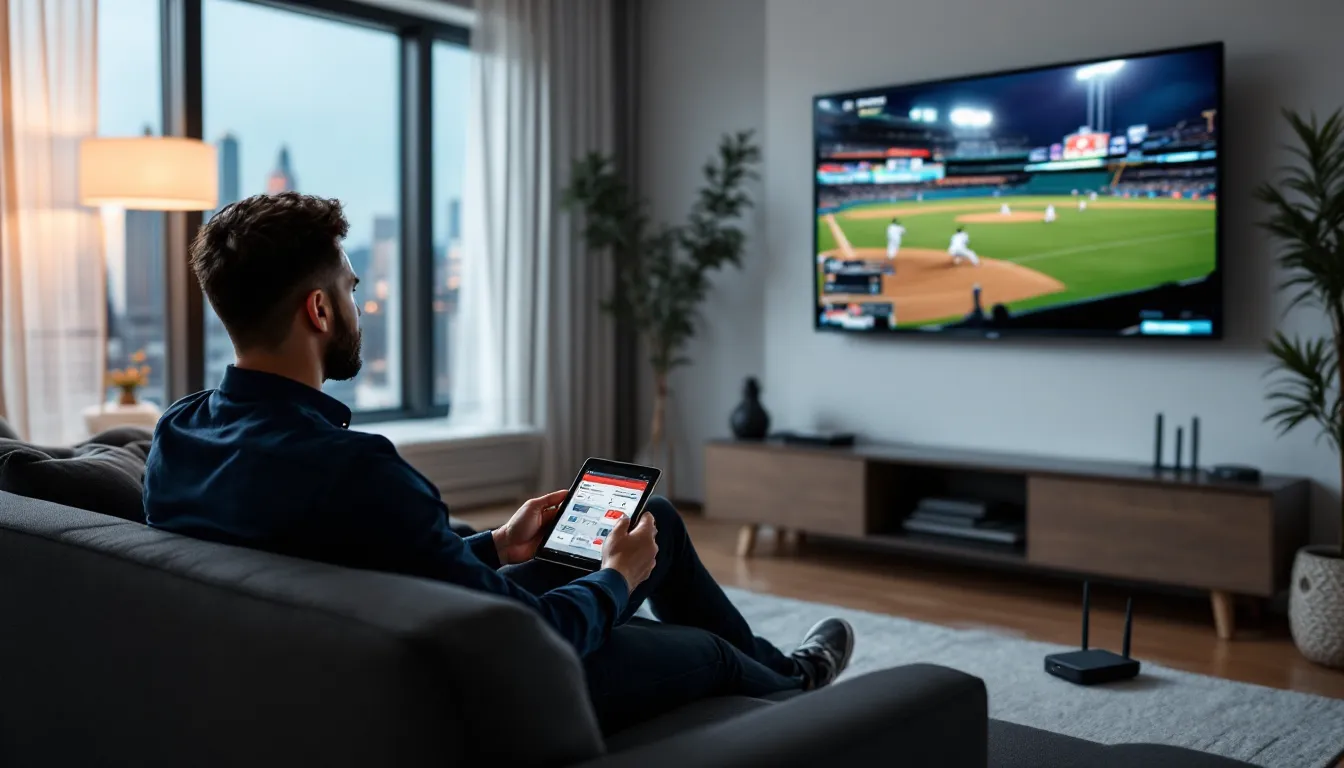
Whether you’re a die-hard San Francisco Giants fan or just tuning in for a few matchups each season, figuring out where to watch games in 2026 can feel like navigating a labyrinth. The landscape of sports broadcasting has shifted dramatically, with cable subscriptions giving way to streaming platforms, regional sports network battles creating blackout headaches, and pricing models that range from surprisingly affordable to wallet-draining.
This guide cuts through the confusion. It covers every legitimate streaming option for catching Giants games live, breaks down the blackout rules you need to understand, and walks through the technical setup to ensure you’re not stuck buffering in the bottom of the ninth. If you’ve been Googling variations of “why can’t I watch the Giants game” at 7:05 PM on a Friday, this is for you.
The Giants broadcasting ecosystem in 2026 involves a mix of national deals, regional agreements, and MLB’s own streaming infrastructure. Unlike gaming where a single platform might host everything, baseball splits rights across multiple providers based on geography and game type.
National broadcasts (Sunday Night Baseball, playoff games) appear on different networks than weeknight games against the Dodgers. Regional games, the bulk of the regular season, flow through NBC Sports Bay Area, while out-of-market fans rely on MLB.TV with its infamous blackout restrictions.
MLB.TV remains the primary streaming product for baseball, offering every out-of-market game in HD with home and away broadcast feeds. The 2026 season pricing sits at $149.99/year for all teams or $109.99/year for a single-team subscription.
Key features include:
The catch? In-market blackouts. If you live in the Bay Area, Giants games are blacked out on MLB.TV to protect NBC Sports Bay Area’s broadcast rights. This makes MLB.TV nearly useless for local fans unless paired with a VPN, a gray area we’ll cover later.
MLB also runs a free tier with limited game access and a weekly free game rotation, though Giants games rarely appear there during prime matchups.
NBC Sports Bay Area holds exclusive rights to most Giants regular-season games through 2032. The network broadcasts approximately 140 games per season, with the remainder appearing on national broadcasts.
Accessing NBC Sports Bay Area requires either:
The network’s streaming quality maxes out at 720p60 in most markets, not quite the 1080p60 or 4K some platforms offer for other sports, but serviceable. Latency typically runs 30-45 seconds behind live, which matters if you’re following along with social media reactions.
Starting in 2026, NBC Sports Bay Area introduced an experimental direct-to-consumer option at $19.99/month for cord-cutters in the designated market area (DMA). Early reports suggest solid streaming performance but limited device support at launch, no Roku or Fire TV initially, forcing viewers to Chromecast or AirPlay from mobile devices.
Choosing a streaming platform depends on your location, budget, and whether you care about other channels beyond baseball. The market has consolidated since the mid-2020s, but several viable options remain.
MLB.TV works beautifully for one specific use case: watching teams outside your home market. A Giants fan in Boston gets every game without restriction. A Giants fan in San Francisco gets blacked out for every single game that matters.
Blackout restrictions apply based on IP address geolocation:
The platform’s pause and resume feature lets you start a blacked-out game 90 minutes after first pitch and watch without spoilers, assuming you can avoid score notifications that long.
MLB.TV’s mobile apps support offline downloads for flights or commutes, download a condensed game before boarding and watch without Wi-Fi. The feature maxed out at five simultaneous downloads in the 2025 update.
One underrated feature: alternate audio feeds. You can sync the Giants radio broadcast with the TV feed if you prefer Duane Kuiper and Mike Krukow’s radio chemistry over the TV commentary.
Several “skinny bundle” services include NBC Sports Bay Area in their Bay Area market packages:
YouTube TV ($82.99/month as of March 2026)
Hulu + Live TV ($76.99/month)
FuboTV ($79.99/month base plan)
DirecTV Stream ($89.99/month for Choice package)
All these services offer free trials (usually 5-7 days), but they’ve gotten stricter about requiring payment info upfront and auto-billing immediately after trial periods. Similar to how gaming setup tutorials emphasize testing hardware before committing, run a trial during a homestand to verify stream quality.
Legitimate free options are sparse for Giants games specifically:
MLB’s Free Game of the Day rotates through matchups, occasionally featuring the Giants against marquee opponents. Quality matches the paid MLB.TV experience, but you can’t count on it for consistent coverage.
Peacock ($7.99/month) occasionally streams Sunday morning games as part of NBC’s broadcast package. Giants appearances are rare but possible for high-profile series.
Local broadcast affiliates (KTVU, KPIX) air roughly 10-15 games per season for free over-the-air. An HD antenna ($15-30 one-time purchase) picks these up if you’re within 30 miles of the Sutro Tower transmitter.
Avoid sketchy “free streaming” sites that pop up in search results. Beyond the malware risk, quality is abysmal, 240p feeds with 90-second delays and constant buffering. The risk-reward calculation makes no sense when legitimate options start at $8/month.
Hardware and connection quality matter more than most fans realize. A premium streaming subscription means nothing if your router is from 2018 or you’re trying to stream 1080p60 on a 10Mbps connection.
MLB.TV and most streaming services support a wide range of devices:
Streaming Devices:
Gaming Consoles:
|
S and Xbox One
Smart TVs:
Mobile and Tablets:
For the smoothest experience, dedicated streaming devices outperform smart TV apps. A $50 Roku or Fire Stick delivers faster load times, better buffering management, and more frequent app updates than most TV manufacturers provide.
The Apple TV 4K offers the best picture quality for streaming services that support it, with frame rate matching that eliminates judder during fast camera pans. Worth the premium if you’re particular about motion clarity during stolen base attempts.
Minimum and recommended speeds for baseball streaming:
Those numbers reflect single-stream usage. Add 10-15 Mbps per additional concurrent user in your household.
Wired Ethernet beats Wi-Fi every time. If your streaming device sits near your router, use a Cat6 cable. Latency drops, buffering events decrease, and quality stays consistent even when someone else starts a video call.
For Wi-Fi setups:
Run a speed test during typical viewing hours (7-9 PM local) rather than at 2 AM when the network is empty. Comcast’s advertised “up to 100 Mbps” often delivers 35 Mbps during peak congestion.
If you’re experiencing persistent buffering, check your router’s QoS (Quality of Service) settings. Prioritizing your streaming device’s MAC address ensures it gets bandwidth before your roommate’s Fortnite session.
MLB’s blackout rules remain the most frustrating aspect of baseball streaming in 2026. They exist to protect regional broadcast deals and theoretically drive stadium attendance, though their effectiveness at the latter is debatable.
Blackouts operate on two levels:
Regional blackouts prevent viewers within a team’s designated market from watching games on MLB.TV. The Giants’ blackout zone includes:
MLB determines your location via IP address. Using your phone’s GPS doesn’t matter, it’s your internet connection that counts.
National blackouts apply to everyone when games air on:
These games become available on MLB.TV 90 minutes after the final out. Playoff games face the same restriction.
The blackout checker on MLB.TV’s website (mlb.com/live-stream-games/subscribe) shows exactly which teams are blacked out from your current IP address. Run this before purchasing a subscription, no refunds if you discover the restriction after buying.
If you’re a Giants fan living outside the blackout zone, MLB.TV provides the cleanest solution. For in-market fans, options narrow considerably.
Subscribe to a service carrying NBC Sports Bay Area. YouTube TV, Hulu + Live TV, and FuboTV all include the channel in Bay Area markets. This is the most straightforward legal path, though monthly costs add up ($83-90/month range).
Use NBC Sports Bay Area’s direct subscription if you’re in the DMA and willing to work within its device limitations. At $20/month, it’s cheaper than full streaming bundles if you only care about Giants baseball.
Travel outside the blackout zone. Sounds absurd, but if you’re visiting family in Seattle or on a work trip to Chicago, MLB.TV suddenly works perfectly for Giants games. Download the condensed game before returning to California.
Split subscriptions seasonally. Some fans subscribe to YouTube TV April through September exclusively for baseball, then cancel during the offseason. Most services allow month-to-month cancellation without penalties.
VPNs exist in a legal gray area. Using one doesn’t violate federal law, but it does breach MLB.TV’s terms of service. The company actively blocks known VPN IP addresses, playing cat-and-mouse with VPN providers who create new servers. We’re not recommending this route, just acknowledging its existence in the ecosystem.
Mobile streaming has improved dramatically since the choppy, battery-draining early days. Current apps deliver smooth HD streams and battery management that won’t kill your phone by the seventh inning.
MLB app (iOS/Android)
The app’s At Bat audio subscription ($19.99/year) provides radio broadcasts for all teams without blackouts. Perfect for listening during commutes while saving video for home viewing.
YouTube TV app (iOS/Android)
NBC Sports app (iOS/Android)
Mobile streaming quality adapts based on connection speed. On 5G networks, expect 1080p60. On LTE, you’ll likely get 720p with occasional drops to 480p during network congestion. The esports community has long emphasized the importance of stable connections during competitive play, and the same principle applies to watching a tight game in extra innings.
Baseball games consume significant data when streaming over cellular:
A full nine-inning game averages 3 hours, meaning a single 1080p stream eats ~9 GB of your data plan.
Strategies to reduce data consumption:
Unlimited data plans from Verizon, T-Mobile, and AT&T technically allow unrestricted streaming, but all three throttle video to 480p or 720p depending on plan tier. Read the fine print, “unlimited” rarely means “unlimited at full quality.”
iOS users can track streaming data usage under Settings > Cellular > scroll to app. Android users find similar info under Settings > Network & Internet > Data Usage > App Data Usage.
Once the basic streaming setup works, several features can elevate the viewing experience from functional to immersive.
Picture-in-picture (PiP) lets you watch the game in a small window while browsing stats, checking fantasy lineups, or arguing with strangers on Reddit about managerial decisions.
Platform support:
Multi-game viewing through MLB.TV lets you watch up to four games simultaneously in quad-view. Useful for monitoring Giants games while tracking other NL West rivals’ scores. The interface lets you assign audio to one primary game while the others run muted.
Second-screen experiences work best with a tablet propped next to your TV:
Some fans run dual HDMI inputs to their TV, one for the game broadcast, one for a laptop displaying stats dashboards. Overkill for casual viewing, perfect for obsessives tracking launch angle and exit velocity.
MLB.TV’s overlay stats feature displays batter stats, pitch velocity, and count information without leaving the video player. Toggle it via the info button during live games.
Alternative broadcast feeds:
MLB.TV offers both home and away broadcasts for every game. Giants fans can choose between NBC Sports Bay Area’s Duane Kuiper and Mike Krukow or the opposing team’s booth. Occasionally the visiting broadcast provides a refreshingly different analytical perspective.
Instant replay controls vary by platform:
MLB.TV’s condensed games trim each game to roughly 30 minutes of action, every pitch, every hit, every pitching change, zero commercials or dead time. Available roughly 90 minutes after the final out. Perfect for catching up on missed games without 3-hour commitments.
Classic games archive provides access to historic Giants moments: Bonds’ record-breaking home runs, World Series wins, perfect games. The archive stretches back to 2009 for most teams, with select earlier games added periodically.
Even with solid internet and proper subscriptions, streaming hiccups happen. Here’s how to diagnose and fix the most common problems.
Buffering or constant quality drops:
If buffering persists even though adequate speed, your ISP might be throttling streaming traffic. Some providers deprioritize video during peak hours. A VPN can sometimes bypass this (legal for this purpose), though it adds latency.
“This game is blacked out in your area”:
App crashes or login failures:
Audio/video sync issues:
Poor video quality even though fast connection:
Black screen with audio:
When all else fails, contact the streaming service’s support. Most offer chat or phone support during live sporting events, knowing thousands of angry fans create bad PR when games are unwatchable.
Streaming baseball isn’t cheap when you add up the annual costs. Here’s a breakdown of what different fan profiles might spend:
The Local Die-Hard (watches most/all games in Bay Area):
The Out-of-Market Fanatic:
This is actually the best value scenario, full season access, no blackouts, all archived games.
The Casual Fan (15-20 games per season):
The Cord-Never (wants everything streaming):
For comparison, traditional cable packages with NBC Sports Bay Area run $90-140/month depending on provider and channel tier, meaning $1,080-1,680 annually.
Cost-saving strategies:
The calculation shifts if you value other sports. A Giants fan who also follows the Warriors and 49ers might find year-round YouTube TV worthwhile. Baseball-only fans should absolutely cancel October through March.
Compared to other entertainment costs, streaming baseball falls somewhere between reasonable and absurd depending on perspective. Much like how annual gaming industry celebrations bring together premium experiences at various price points, baseball streaming requires assessing what level of access justifies your budget.
Streaming Giants games in 2026 requires navigating a fragmented landscape of services, restrictions, and pricing tiers. There’s no single perfect solution, your ideal setup depends on location, budget, and how many games you actually watch versus intend to watch when subscribing in March.
Local fans get the rawest deal, forced into expensive streaming bundles or the experimental NBC Sports Bay Area direct option. Out-of-market fans enjoy cleaner access through MLB.TV, though blackout rules still bite during national broadcasts. Casual viewers can cobble together free and cheap options if they’re flexible about which games they catch.
The technology works well when configured properly. Buffering issues have largely disappeared with modern internet speeds and improved streaming infrastructure. The frustration stems from business decisions, blackout zones, regional restrictions, and exclusivity deals that prioritize corporate revenue over fan experience.
Set up your streaming before Opening Day. Run tests during spring training. Verify your subscriptions cover the games you care about. And maybe keep that old antenna around for the handful of free broadcasts still available. The first pitch of the season always arrives faster than expected.
